Top5s · Transcript · · Updated
I've Researched 9/11 For 15 Years. These Things Still Don't Add Up... – Transcript
Video by Top5s · Watch the original on YouTube
Summary
AI-generated from the transcript. Verify details against the source video.
- On the night before the attacks, lead 9/11 terrorist Mohammed Atta and Abdul Aziz al-Omari traveled from Boston to Portland, Maine.
- Naval al-Hazmi and Khalid al-Mihdhar lived openly in the United States for over a year with assistance from members of the local Muslim community.
- Official reports state that the cockpit voice recorders and flight data recorders from American Airlines Flight 11 and United Airlines Flight 175 were never found.
Use this video with Pro
Reading, copying and transcript downloads are free. Create saved AI results for this video with a signed-in Pro account ($9/month).
Transcript
Search ignores accents. All transcript text stays visible.
I've researched the events of September 11th for more than 15 years, and even after all this time, there are still parts of the story that leave me with questions. Why did Mohammed Atta risk the entire operation by flying out of Boston only to fly back into the city on the morning of the attacks?
How did two future hijackers, already known to American intelligence, spend more than a year living openly in the United States without being found? Why were the flight recorders from the two planes that struck the World Trade Center never officially recovered?
And why did every one of the hijacker pilots travel to Las Vegas in the months before the attacks? Some questions have reasonable explanations, others remain disputed or unresolved to this day. Now, this is by no means an exhaustive list, and if you'd like to see more of these, then let me know in the comment section below.
The first one might be one of the strangest of all, because on the night before the attacks, Mohammed Atta deliberately put himself in a position where a single delayed flight could have changed everything. Why did Atta risk flying through Portland?
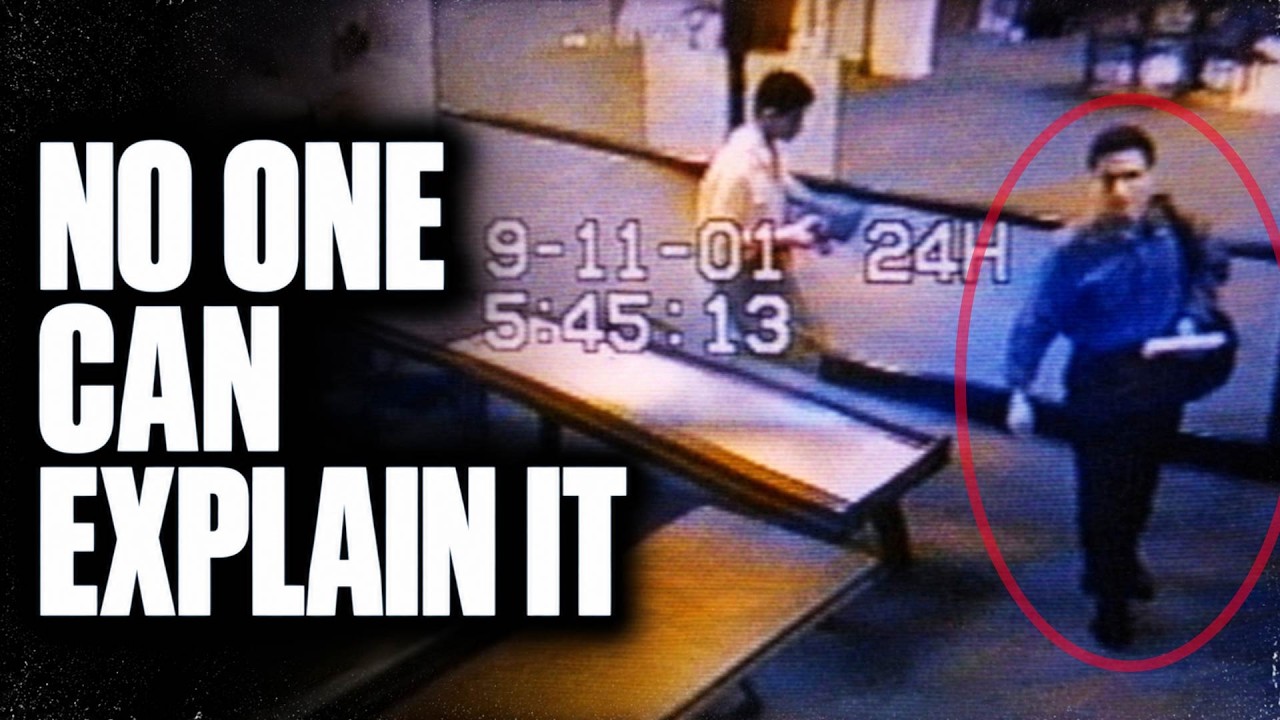
On the afternoon of September 10th, 2001, lead 9/11 terrorist Mohammed Atta and fellow hijacker Abdul Aziz al-Omari left Boston and drove north to Portland, Maine. This decision was incredibly strange, considering that the following morning they needed to return to Boston, specifically to Logan International Airport to board American Airlines Flight 11, which was scheduled to depart at 7:45 a.m.
Now, what was the reasoning behind introducing another airport, another flight, and a potential opportunity for something to go wrong? To this day, there is no definitive answer. What we do know is that it wasn't a last-minute decision, as Atta had booked the Portland connection flight the month prior.
On the evening before the at approximately 5:43 p.m., Atta and al-Omari checked into room 233 at the Comfort Inn in South Portland. To onlookers, they appeared to be two ordinary travelers spending the night before an early flight.
That evening, the two men visited Pizza Hut for a short time. Then, around 8:31 p.m., a surveillance camera captured their rented car at a Key Bank ATM. 10 minutes later, they used another ATM. Shortly after 9:00, they stopped at a gas station to ask for directions.
And afterward, they went to Walmart. Atta was caught on surveillance footage at 9:22 p.m. in a Walmart in nearby Scarborough, where he stayed for about 20 minutes. That night, members of the hijacking group were making phone calls. While the specifics of each call are unclear, it is likely final arrangements were being made.
Eventually, Atta and al-Omari returned to their hotel room to prepare for the next day. At 5:33 a.m. on September 11th, they checked out of their hotel and drove their rented Nissan the short distance to the parking area of Portland Airport.
At 5:43, they checked in for their flight, where Atta was selected by the airline's computer-assisted passenger pre-screening system for additional security procedures. As a result, his checked luggage was supposed to be held until the airline confirmed that he had boarded the flight.
This might seem significant, but in 2001, it wasn't as alarming as we might think today. The CAPPS system did not automatically trigger the intensive screening we associate with modern airport security, and as a result, Atta was still able to board the flight.
There was a brief issue because Atta believed he would be checked through to Boston and wouldn't need to interact with the airline again. However, upon arriving in Portland, an agent informed him that he would need to check in again at Boston to receive his boarding pass for the connecting flight.
At this point, Atta became visibly angry, as he clearly wasn't expecting this. At approximately 6:00 a.m., the small commuter aircraft departed from Portland heading to Boston Logan Airport. The scheduled arrival time was 6:45, which left Atta and Al-Omari with about 1 hour to navigate through the airport and board Flight 11.
Any delays, problems, or misconnections could have jeopardized the entire plan. Fortunately for Atta, the aircraft arrived on time, and he and Al-Omari were back in Boston. Atta made a telephone call before they proceeded towards their connecting flight, American Airlines Flight 11, which was set to depart at 7:45.
Atta had checked two bags in at Portland. When he reached Logan, the bags apparently didn't make it onto Flight 11 due to the hurried transfer. Inside those bags, investigators would later discover crucial physical evidence related to the plot.
This included important documents, identification, personal materials, and handwritten instructions known as the last night. Ironically, the detour that nearly caused a major complication for Atta that morning ultimately provided investigators with crucial evidence that would have otherwise vanished along with Flight 11.
But, the question is, why would the operational leader of 9/11 deliberately introduce a separate 90-minute flight into the morning of the attack? If the connecting flight was late, he wouldn't have made Flight 11. And if his bags been searched, he would have been stopped from boarding at all, and the whole plot would have unraveled.
One possible reason Atta and Al-Omari drove away from Boston only to return was to avoid drawing attention to themselves. They might have wanted to separate their checking process from that of the other hijackers to decrease the chance of detection.
But, who knows? Regardless of their reasoning, their choice was incredibly risky, and we may never know the true motivation behind their actions. Investigators are still to this day searching for answers, but are unable to uncover anything. >> Who helped the hijackers establish themselves in America?
On January 15th, 2000, two men stepped off of a plane at Los Angeles International Airport. They were young and spoke little if any English. With almost no experience in life in the West, they faced significant challenges. Yet within months, they would become two of the most important members of Al-Qaeda's developing 9/11 operation.
Their names were Hazmi al-Hasmi and Khalid al-Mihdhar. More than a year before the attacks, these two men were already in the United States. But they needed assistance. They required a place to live, transportation, bank accounts, and identification.
They also needed to understand how America worked. And most importantly, they needed people to help them. The question is, who helped them and what did they know? It has never been established exactly where Hazmi and Mihdhar went after clearing immigration at Los Angeles.
But it's believed the two men likely had some kind of prearranged assistance for their arrival. Their instructions were unusual. According to Khalid Sheikh Mohammed, the mastermind behind the planes operation, Hazmi and Mihdhar were supposed to pose as Saudi students and seek help from local Muslim communities.
They were also instructed to learn English so that they could eventually begin flight training. Soon after arriving in Los Angeles, they spent time at the King Fahd Mosque in Culver City and formed acquaintances in the area. The commission investigated whether anyone associated with the mosque had assisted the two men in establishing themselves.
One individual examined was Fahad al-Thumairy, an imam at the mosque and an accredited Saudi diplomat. However, after reviewing the available evidence, the commission concluded that it did not find any evidence suggesting that he provided assistance to Hazmi or Mihdhar.
And the identity of the person who may have assisted the two men during these early days in Los Angeles remains unknown or hidden. On February 1st, Hazmi and Mihdhar met Omar al-Bayoumi at a halal restaurant on Venice Boulevard.
Bayoumi, a Saudi national living in San Diego, supposedly overheard the two men speaking Arabic and approached them. Hazmi and Mihdhar introduced themselves as Saudi students who'd recently arrived in the United States to study English. They mentioned that they were having difficulty settling into Los Angeles. In response, Bayoumi suggested that San Diego would be a better place for them to live and offered his assistance in helping them get settled there. Within a few days, Hazmi and Mihdhar traveled to San Diego.
On February 4th, the two men visited the Islamic Center of San Diego to look for Bayoumi and they accepted his offer for assistance. Bayoumi helped them find an apartment, completing the lease application on their behalf, and co-signed the lease when the real estate agent would not accept their cash deposit.
Bayoumi assisted them in opening a bank account. He then obtained a certified check from his own account for the deposit and Hazmi and Mihdhar reimbursed him. They moved into the apartment on February 5th and for a period they lived in an apartment complex where Bayoumi himself resided.