High Performance · Transcript · · Updated
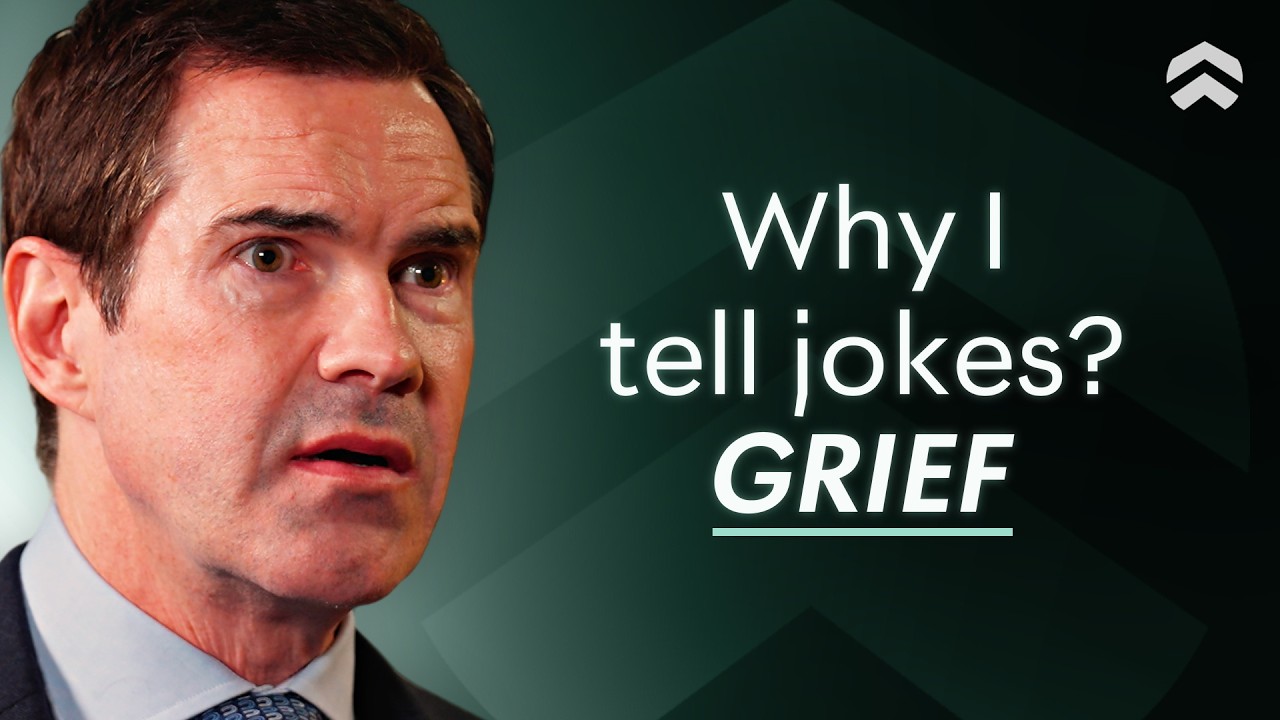
Jimmy Carr: Stop Overthinking Your Life & Fix Your Anxious Mind – Transcript
Video by High Performance · Watch the original on YouTube
Summary
AI-generated from the transcript. Verify details against the source video.
- Jimmy Carr states that mastering your own mind can start with taking small chunks like focusing on what you can do over a 24 hour period.
- Jimmy Carr explains that anxiety is thought without control, while a flow state is control without thought.
- Jimmy Carr shares that real self-confidence comes from giving the world irrefutable proof you are who you say you are by stacking receipts.
Key moments
- There are guys up mountains in Tibet trying to get to where…
- The autumn wellness bundle. And in that, you get a free AG1…
- Not sports betting. Not that kind of a quick fix, but the…
- Uh you know, on on your darkest days you you get the…
- >> Well, you're talking our language. You know, we've created a foundation…
- The top on luck. Real excellence takes time. It's about showing up…
- Voice. >> Yeah. We've all reached an age, I think, where hopefully…
- That is the most powerful thing you can do at this point.…
Use this video with Pro
Reading, copying and transcript downloads are free. Create saved AI results for this video with a signed-in Pro account ($9/month).
Transcript
Search ignores accents. All transcript text stays visible.
There's a lot going on in the world. >> Yeah. >> Choose what you're going to give a about. Why teach stand-up comedy? Why would that be a valuable thing in schools? You will write down and order your thoughts, you'll learn to communicate them, and you will speak in your own authentic voice. Is that not more valuable than grade three on the piano? I I think it is. There's a a bit of a crisis with going on with young men. You want to hear the solution?
>> Go on. >> Okay. It's It's spicy, but stay with me. >> It's lovely to have you with us. Have you ever seen any of our high-performance podcast? >> of your podcast, yeah. >> I like it a lot. >> It's good. >> It's the kind >> Great.
>> of content I would I would consume. >> Is that right? Why is that? >> Um well, I like that I mean I I do like that idea of going um you sort of There's no copying the content >> Yeah. >> from someone else's life, but I think that great thing about like sort of like reading biographies.
>> Mhm. >> Like why are biographies so entertaining? Well, because you sort of can see it Okay, so they got to there, but they're just a guy. >> Yeah. >> They're just a guy that did something. How did they do that? They're just flesh and bone, and they managed to do this incredible thing. How did they get that done?
>> Well, I'm glad we have you as a listener, and that's helpful for us. >> Yeah, that's one. >> Thank you. >> We finally found the one, guys. We found our one listener. >> Yeah. >> Um well, Jimmy, look, welcome to High-Performance. >> Thanks very much, yeah. I feel like I feel like a proper player. I'm I'm on High-Performance, I must be doing good.
You must have done something right. >> Well, you've done lots of things right, but the interesting thing for us is how you've done them. It's not what you've done, it's how you've done it. So, from the overthinking to the challenges you've had in your life, the discipline you've had to find, the moments of reinvention, the moments where you I guess had to choose whether life was happening to you or whether you were controlling it, because we think that your story actually is about something so much bigger than comedy. Um we want to start by asking you about how we you can master your own mind, which in turn helps you to master your own
life. >> Uh well, I think it's it's it's little things, right? Mastering your own mind I mean, if you're listening to this, you go, "Oh, that sounds that sounds like a lot." Um but actually, just it's Okay, what's the what's the smallest chunk we could take?
Right? So, 24 hours strikes me as very sensible. Like, I don't like New Year's resolutions. I don't like 5-year plans particularly. I really like thinking about what could I do today that I'll be happy I did tomorrow.
We will look back on our lives, and whether it is with nostalgia or regret depends on what we do now. So, everything in life, what could you do that would be better in 24 hours? What would you eat today? What would you drink today? Like, booze is a great example, right? It's great to have a couple of drinks. But if you get drunk, you're borrowing happiness from tomorrow.
So, what you know, be kind to your future self. It's almost like a kind of bigger version of that. There's the golden rule, which is treat others as you want to be treated, and then there's the platinum rule, which is treat yourself as well as you treat other people. I think a lot of people are horrible to themselves. Their internal dialogue is mean, and they don't treat themselves well. You know, how much of a mental health crisis is actually how
much of a a hardware problem is a software problem? Right? So, if you take someone that is anxious and depressed. I'm not saying those aren't real things. Those are real things that you need to address. But first, before you before you go and see anyone, are you getting 8 hours sleep a night?
Are you walking in nature? Are you eating right? Are you spending time with people that you love one-on-one, having real conversations? Like, if you've got that stuff done, and you're still depressed and anxious, then we need professional help. But actually, getting those basics right is And it's so hard to hear that when you're in the middle of it. It's so I you know, I I suffer a little bit with anxiety, but it tends to be when it bubbles up is when I'm traveling too much, I'm not sleeping
enough, I'm not eating right. I think there's a trick where you think the anxiety is about what you're thinking about, but it isn't. It's just anxiety. And if you didn't want to think about that thing, you'd be thinking about something else. So, anxiety is thought without control, and a flow state is control without thought. So, you want to get into more control states more flow states. It might be standing on stage, it might be whatever your thing is that you do that you go
just time passes doing this, and I just I don't really have to think about it. It's just great. So, I've got a worrying mind. So, in order to I mean, it's good, right? Everything creative I've ever done has been because I can't switch off my mind. Yeah. It It's I think we've coded boredom incorrectly in our culture.
So, boredom is seen as a a bug. But it isn't. It's a It's a It's a feature. It's It's the It's where everything comes from. It's like being a bit bored and and sort of thinking about things and just kind of cinema Like, I think boredom is unappreciated serenity.
There are guys up mountains in Tibet trying to get to where I can get to in an airport in Luton. Come on. Boredom is boring. Might think of some jokes. Great. Like, having that That's kind of the basis of I think we're overstimulated. I think being bored is is a is a good thing. I think problems are misdiagnosed in our culture.
Problem just means you have something to deal with, right? There's There's no no problems. There's just bigger problems. So, it's like it's Plato and the Zarathustrans that I think came up with it around the same time. They both came up with the idea of heaven.
What was heaven for the Zarathustrans and perfection for Plato, the Platonic ideals. It's horse There's no perfect. I'm with Nietzsche on this. I say embrace the chaos. It's It's a chaotic mad world, and you just kind of do what you can with what you've got where you are.
Great. And >> What is the trick that you've found for quelling the overwhelm? >> It's like I think the first time you have a panic attack, you think, "Oh, this is is this my forever now?
Is this And then the second time you go, I remember this ends. This ends. You'll be okay. Be gone in a bit. You'll be all right. You go Like I don't suffer as bad as some people. You know, some people can't white knuckle it and they and they need you know, professional help. So, it's it's I think I'm lucky as well. I think again in the gratitude practice, that thing of going there's a there's a big,
you know, difference between me in my mid-20s feeling sad, which I was, but you would call it depressed. But it's weird because, you know, depression is two things. It's like there's a you know, a chemical imbalance in your head and also circumstantial. If it's circumstantial, that's better cuz you can do something about it. So, have you got yourself to that place?
>> Mid-20s, I was like I was working for a large oil corporation. And at some point, I went yo ho ho, a pirate's life for me. But I think it's the first decision I made. I think everyone There's a lot of talk about puberty, going from being a boy to being a man. I you know, when you're 12-year-old boy and when you're 18, you're a man and something magical happens there. I don't think many people talk about that second transition, 24 for women, 25 for men, the completion of
the frontal cortex. But I know a lot of people that have that like awakening in their mid-20s where they go they kind of go, "What am I What am I doing? What am I doing with my life?" And you know, it's that classic I think it's Confucius, isn't it? Every man has two lives. Yes, yes. And the second starts when he realizes he only has one. Yep.
You have one life. You can do anything you want. You only have to face the consequences. Isn't that glorious? But it's kind of a rush of blood to the head, right? There's that beautiful line in your first book, Jimmy, that you used around that time when you were working in the old company and you asked the question, how much does it take for you to give up on your dreams and your ambitions?
>> Mhm. >> A lot less than you would think. >> Yeah, you would think like but your life is it's it's what what have you got? You got time and attention. And where are you going to put your time and attention? What what's what matters to you? I mean if you people talk a good game about what they're interested in.
But look at the diary from last week and that really tells you what your priorities are. >> So when you were 25 and you were coming to that realization, what was it that made you Was it more the attraction of going and doing something that was relatively unknown and chaotic or was it running away from the stability that you obviously had?
>> I I I don't know. I mean I think it's very easy to you know, we live our lives forwards and then sort of understand them looking back and it's easy now to think was this a simple decision. Leave that job in a corporate uh environment and go and travel the world being a successful comedian. But that isn't what I left for. I left because I'd seen a couple of stand-up gigs above a pub and I got very very lucky. I mean I do a gratitude practice and I never think it's enough.
You can never have enough gratitude cuz you go I got into comedy and it was darts or field hockey or lacrosse. And now it's Premiership football. How did I get that lucky that I rode the wave? That wasn't me. That's like comedy has become culturally much more significant and bigger globally >> Yeah.
>> in the last 25 years for as long as I've been doing it. That isn't like that's not me doing that. That's just that happened and I rode that wave. I got incredibly lucky with timing. And I was very inspired by the people around me that that maybe I could be creative and I'd come from this sort of very nice um you know, middle-class background slightly overeducated um and I felt like I had to kind of fall into this little box.
And then it's that idea of just going well no, you can do anything. And I think you know, increasingly now where we don't really know what to train people for in the future, I think that thing about being um a non-fungible human, being >> Yeah.