edureka! · Transcript · · Updated
ITIL Processes Explained | ITIL v3 Framework | ITIL® Foundation Training | Edureka – Transcript
Video by edureka! · Watch the original on YouTube
Summary
AI-generated from the transcript. Verify details against the source video.
- The ITIL v3 framework is a descriptive best practice library organized into five service life cycle stages.
- The ITIL v3 framework defines 26 processes distributed across its five life cycle stages.
- Continual service improvement utilizes a seven-step improvement process and applies the plan-do-check-act approach.
Use this video with Pro
Reading, copying and transcript downloads are free. Create saved AI results for this video with a signed-in Pro account ($9/month).
Transcript
Search ignores accents. All transcript text stays visible.
Welcome to itl v3 processes webinar today. We are going to look at various different processes of itl v3 how each of these processes are distributed across service life cycle as defined in itl v3 framework.
So I am Chandra MR. I'm known as CMR in the industry. I'm a certified title expert in v3 title for foundation as well as title for managing professional. I'm a certified PMP prints to a gel scrum master Kobe to five and DevOps foundations from DevOps Institute.
So that's about me. So we'll move forward in terms of looking at itl v3 processes. The agenda of this seminar would be to understand what is itl v3 framework is all about as a brief. Then we will look at each of the life cycle stages that is service strategy service design service transition service operations and continual service improvement.
And further we will go ahead in terms of looking at how these 26 processes defined in itl v3 are organized or spread across various different life cycle stages of itl v3 framework in a service life cycle. So first we will look at the module one that is what is itl v3 framework is all about.
So as we know itl stands for information technology infrastructure library. So the journey of this particular best practices started in 80 setting 83 86 in HMS. So our majesty stationery office in UK.
So later the version v2 was released and then v3 was released during year 2008 and that was revised in the year 2011 as itl v3 2011. So when it was revised from itl v3 to itl v3 2011 version, there were few processes which were introduced compared to the number of processes which were there in the previous version.
So that's a pretty brief history about itl. So itl basically being a best practice is descriptive in nature. It is non prescriptive. When I say descriptive and non prospective means it does not prescribe any specific pointers like one has to do while following or applying itl.
So basically being a best practice. This provides a descriptive language and it is a best practice which is adopted and adapted by the industry organizations across proven and then it has created that value. What is required to be achieved? So it has a set of guidelines for it practitioners to do it which is based on itl library books on five life cycle stages book like strategy design transition operation and continue service improvement.
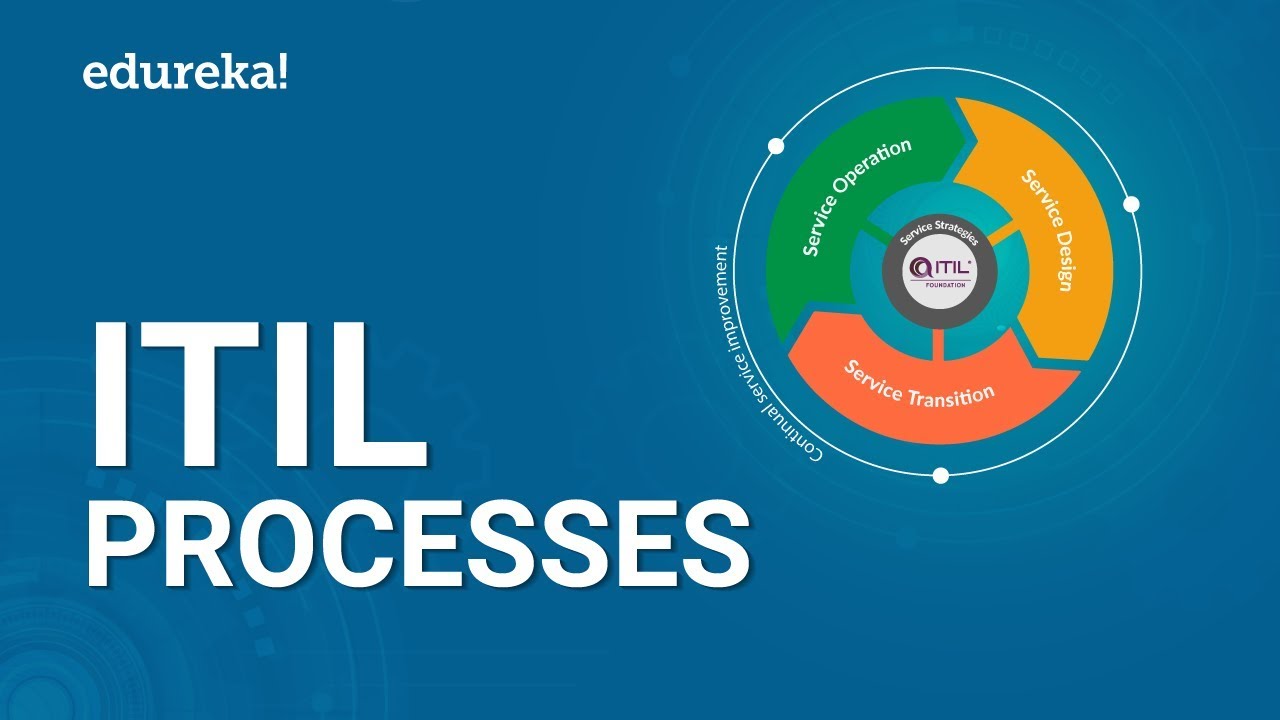
When we say itl v3 life cycle stages. So there are the five life cycle stages as I mentioned service strategy service design service transition and service operation. So if you look at this diagram strategy is written in the middle.
So why it is written in the middle because everything whatever we do the strategy six third directions clearly based on which the services are designed and the design services have been implemented transition made it live by service transition and then service operations monitors and manages the services and ensures that whatever the requirements were expressed by the customers or business are clearly demonstrated during service operations.
So service operations monitors and manages the entire services for its performance and ensure it meets customer realizes customer sees what is expected by them and what is expressed by them before expressing that in front of service organization.
So what is defined in strategy is realized during operation. So whatever we do some strategy design transition operation. So all of these should be improved on a continual basis. So first improvement is on the existing services, whatever I have so to improve that again, I should start with strategy.
If it is a significant amount of effort needed significant amount of investment needed. So I will strategize that entire improvement. So based on the strategy for the improvement itself, I will design that improvement then I'll transition. It means I bring that improvement into live. I've implemented and then it will become part of the operations.
So any services what we implement into production environment the one which is used by the users the value what has been realized by the users this cannot be static. So this has to be improved continually throughout the lifecycle of the services and remember every services as a life cycle has the product has its life cycle.
So from the point where the product or a service will be conceptualized where the inception happens from there the idea started that the user requirements are expressed and through design transition and operations that will come to live and that services or product with his life should fulfill that user requirements.
It's not the end. So as the technology evolves as the people's requirement evolves as people dynamics varies in the market scenario as well as the organization scenario or the business scenario. So services has to be modified updated improved by adding new features and functionalities and it has to be improved on a continual basis.
So this take up an approach of PDC a plan do check Act to improve. However, each of these life cycle stages what is mentioned here as organized certain way where they have the flow of inputs from one stage to other stage moves on. So what is that gets in from one stage other stage exactly?
We will see as we go through the subsequent slides, right? So overall service life cycle involves service strategy to begin with to trigger that improvement. Then service design to design it and service transition to make it live and then service operation to ensure monitoring and management of the service happens.
So all these four life cycle stages are subject to continual service improvement. So improvement can be looked at the component level improvement would be looked at the individuals level improvement would be looked at service level itself improvement would be looked at the process level improvement would be looked at a technology performance levels.
So all those involved to make the service to suit what customer exactly needs. So there should be continual improvement continually evaluation should go on. So further, I think as I mentioned when we started this particular presentation itself 26 processes as defined in ITL with three.
So we will go through that how they are distributed and what is the role of each of those particular processes and each of the life cycle stages. We will understand as you see here service strategy has five processes the five processes are strategy management for IT services demand management service portfolio management financial management business relationship management.
So now strategy basically using these five processes would create a service package and service level package. So strategy management of our IT services considering four piece perspective position plan and pattern provides that necessary directions needed in series strategy required for any services or any service improvement initiative which is taken.
So for those particular services which are considered to implement or considered to bring creation considered for improvements. So that will happen by understanding the opportunities existing now. It may be an opportunity existing in the business itself within the organization itself an opportunity which might be existing in the market based on whatever the business the organization is doing.
So that we call it as a demand. So for example, if you look at the number of people come and access a movie ticket booking portal if I take that as an example, the number of people access that website will be very high during the weekends compared with the people who access that like Monday Tuesday Wednesday to Riverless.
So these variations we call it as a demand now wherever there is a demand is less. Obviously, there is a capacity which is unused so to influence that I think demand management will take an approach of one is fulfilling of demand. Whatever is there other one is influencing the demand so that sufficient capacity can be created at optimum level.
So demand management helps that way to understand what is the demand or influencing the demand to ensure sufficient capacity. Whatever is designed or created is utilized so that there is a better recognition of return from the investment. What is done for the business service portfolio management in entirety every service organization will have a list of services which is provided to their customers.
So portfolio of services are looked at in terms of their viability desirability should we really keep those services in our portfolio or not. That is the first decision second decision would be should this particular services can be improved modified for better experience of customer and better written on investment, whatever is being done.
These are checked periodically for the existing services and for also the newly proposed services so that decisions can be made with the sufficient information in hand. So business cases will be created for this which involves detailing out on the service descriptions risk associate with the services finance associate with the services returns what is been coming from that particular services should we introduce or should we retire or should we improve
should we modify such decisions are taken strategically through service portfolio management process. Now financial management as the terminology itself indicates every services involves lot of components lot of services being utilized to create another services.
Lot of products are used people are used. So all these involves money. So financial management focuses on understanding what is that money it is required like budgeting focus on budgeting when I say budgeting we're speaking about the expenses or cost what we are going to incur to create and monitor manage and provide the services.