PBS NewsHour · Transcript · · Updated
Watchdog group tracks what really happens to your ‘recycled’ e-waste – Transcript
Video by PBS NewsHour · Watch the original on YouTube
Summary
AI-generated from the transcript. Verify details against the source video.
- The Basel Action Network investigated what happens to electronics sent to United States recyclers by placing GPS tracking devices inside 200 old computers, printers, and televisions.
- An investigation concluded that approximately a third of the tracked computers were exported, with many leading to areas like Hong Kong where workers dismantled devices in unregulated scrap yards.
- The United States remains the only developed nation that has not ratified an international treaty to stop first-world countries from dumping e-waste on developing nations.
Use this video with Pro
Reading, copying and transcript downloads are free. Create saved AI results for this video with a signed-in Pro account ($9/month).
Transcript
Search ignores accents. All transcript text stays visible.
You buy a new smartphone or computer and you take your old one to a local recycler. It's the green thing to do, right? Well, it turns out a lot of those devices may not be getting recycled at all. From Seattle, member station KCTS and public media's environmental partnership, EarthFix, Ken Christensen and Katie Campbell, who tells the story, follow the e-waste trail.
So, everybody, this is scenario one. We're buying equipment. We look around, see what they have, and we start haggling over the price. So, any questions? No, sir. I think it's right up here, about a quarter of a mile. Jim Puckett is leading a team that's going undercover to find out what actually happens to electronics that are sent to U.S. recyclers.
Most of the public still thinks a recycler is a recycler and that they're going to recycle right there in America. Shows us 10 meters out. Puckett is the founder of the Basel Action Network, a Seattle-based watchdog group that investigates the afterlife of electronics.
We're basically trying to stop the rich countries from dumping their hazardous waste on the poorer countries. In this case, China. What are they running? Running away. To get inside, a local driver and translator posed as e-waste buyers.
Hello, we're here to buy goods. We just want to see the electronics. With people buying new computers and other electronics more frequently than ever, electronic waste is now the fastest growing waste stream in the world.
On top of that, it contains toxic materials that can poison people and the environment. This investigation began months ago, when Puckett's team put GPS tracking devices inside 200 old computers, printers and TVs. Then they dropped them off at locations across the country, at recycling facilities, donation centers and electronics take-back programs, including some of the industry's most reputable companies.
We sat back and said, where are they going to go? And the little devices went out and spoke to us, saying this is where I am. Puckett's group partnered with Carlo Roddy of the Sensible City Lab at the Massachusetts Institute of Technology. Tracking is really the first step.
In order to design a better system. One of the surprising things we discover is how far waste travels. You see these kind of global e-waste flows that actually almost cover the whole planet. Each device traveled an average of about 2,500 miles, and around a third of the tracked computers were exported.
Of those, most ended up here. Hong Kong is home to one of the world's busiest ports. Ships deliver more cargo than is possible to inspect. As a result, Hong Kong has a reputation for being a transit point for illegal trade and smuggling of all kinds.
Most of the exported tracked devices led Puckett to a little-known part of Hong Kong called the New Territories. It's really a frontier. It's really cowboy land out there. Puckett followed one tracked printer here to a place it calls itself a farm. Farmland. Yeah, that's a great farm in there.
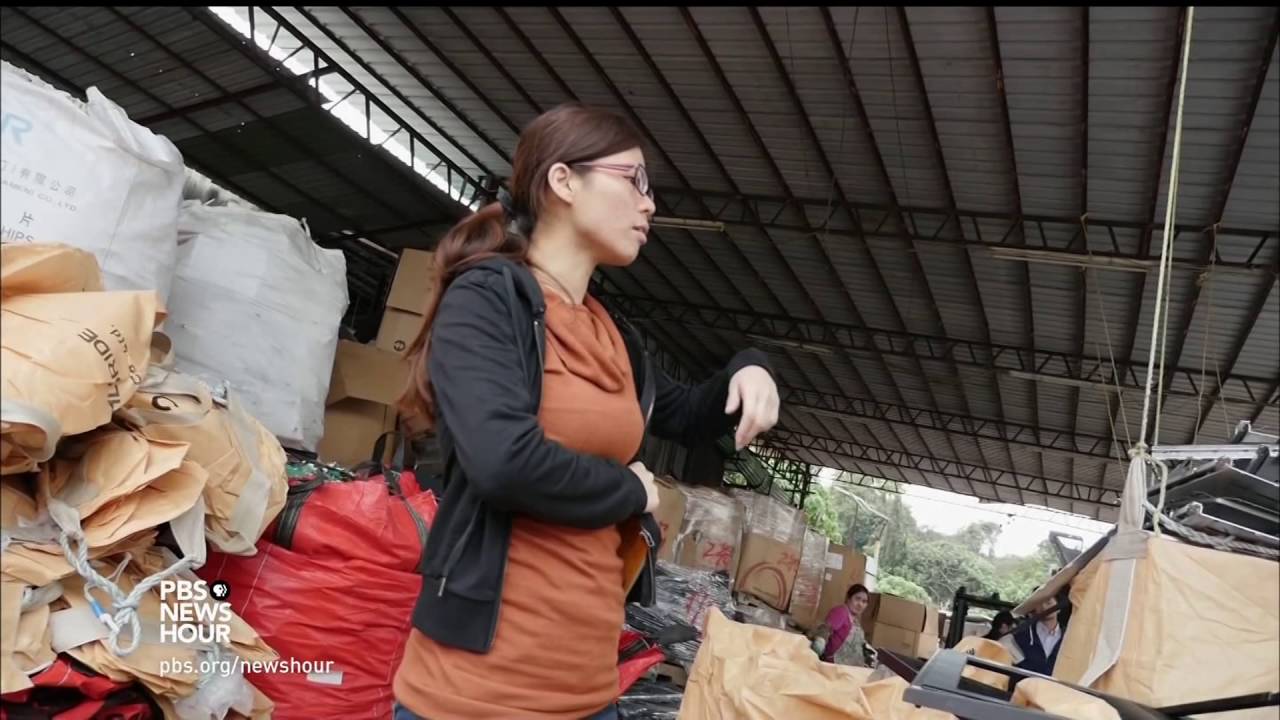
You would have no idea that there was a huge scrap yard there until you look over the fence. Inside, they found printers being taken apart by immigrant workers. I'm looking for asset tags to tell me where the material came from. I look for the environmental harm issues.
I look for the workstations to see how those workers might be exposed. Many of the workers handle hazardous material without protective gear. One concern? Printer toner. A probable carcinogen. There's no protections of this labor force. There's no occupational laws that are going to protect them.
Jackson Lau is the head of the Hong Kong Recycling Association. He runs a licensed recycling facility in the New Territories. And he says the junkyards in the area that import e-waste are unlicensed and unregulated. These old electronics are usually being sorted and dismantled because the leftover components are worthless.
They're being dumped indiscriminately. Look at the tubes. Many, many tubes thrown on the ground here. The white fluorescent tubes light up LCD screens. Each of them contains mercury, and even a tiny amount can be a neurotoxin.
Day in and day out, these workers are completely oblivious to this hazard, are smashing these. The tubes are breaking right in front of their faces, and mercury is very toxic. Lady, do you wear a mask? No. I asked him that if he knows the white tubes are dangerous, he has no idea.
The United States is the only developed nation that hasn't ratified an international treaty to stop first-world countries from dumping e-waste on developing nations. Other developed nations set e-waste collection mandates and require electronics manufacturers to pay for domestic e-waste processing.
Further, the United States has no federal laws requiring electronics to be recycled. Half of states allow electronics to be dumped in landfills. John Shigerian is the CEO of Electronics Recycling International, the largest e-waste recycling company in the United States.
It takes hundreds of employees in each facility to do the real work of electronic recycling. He says that some recyclers are exporting to cut costs, because in the last two years, their biggest source of revenue has plummeted.
At the height of the market, when we would go to sell steel, plastic, aluminum, gold, silver, palladium, copper, we were getting 14 to 15 cents a pound more than we are today. Dell Reconnect, an exciting program that makes getting rid of old technology easy.
Dell was the first major computer manufacturer to ban the export of non-working electronics to developing countries. They partnered with Goodwill, allowing people to drop off old computers of any brand for free to be refurbished or recycled. The electronics are either dismantled on site or sent to Dell's recycling partners.
Dell says that more than 400 million pounds of e-waste has been diverted from U.S. landfills because of their program. But the Basel Action Network and MIT's investigation concluded that tracking devices placed in old computers and dropped off at participating Goodwill locations ended up in Hong Kong, China, Taiwan, and Thailand.
Beth Johnson manages Dell's program. If there's something that did not follow the system, we would certainly want to know about it, and we would certainly take corrective action. In a written statement, Goodwill Industries said it's committed to responsible recycling and encouraged its member organizations, which are autonomous, to review their contracts with Dell.
Back in Hong Kong, Puckett finds more clues to the scale of the problem. Puckett finds electronics from U.S. police departments, jails, hospitals, and libraries.
Government is always trying to save taxpayers money, so they are obliged in some cases to always do the cheapest thing. For now, market forces are driving e-waste exports. Without a federal law banning the export of e-waste, there's little incentive for the industry to change. For KCTS and the PBS NewsHour, I'm Katie Campbell.